


Oct 28th 2026
How We Built a Black Gradient Tulle Prom Dress by Hand
An inside-the-workroom story
Odile: Building the Black-and-Champagne Gown
A sheer boned cage corset, nine hand-formed satin roses, and a reverse-ombre tulle train that ends in champagne.
What this gown is
This is a black-and-champagne ombre ball gown built around a sheer cage corset: black satin-covered Rigilene boning over nude power mesh, a hand-formed ring of nine black satin roses at the waist, and detachable off-the-shoulder tulle sleeves. The skirt is a reverse ombre, layered from black through smoky grey and twilight purple into a champagne train. Every boning channel, petal and tulle tier is cut and finished by hand.
| Silhouette | Classic ball gown, cinched waist, full volume |
| Bodice | Sheer cage corset, satin-covered boning over nude power mesh |
| Waist | Nine hand-formed black satin roses with sequin and crystal rims |
| Skirt | Reverse ombre tiered tulle, black to champagne |
| Sleeves & closure | Detachable off-the-shoulder tulle sleeves; back hooks with modesty panel |
The first version of this dress was paper. That's true of everything in the studio, where our couture wedding dresses handmade to order all begin the same way, but this one stayed paper longer than most. The bodice alone went through four mockups before the lines behaved — drafting tape and pencil marks running the length of the mannequin, every seam drawn, redrawn, and then drawn again over cold coffee.
We knew what we were chasing. A black wedding dress isn't exactly new, and a ball gown is the oldest idea in bridal. The interesting territory was the gap between the two: the most obedient silhouette in the room worn by the least obedient woman.
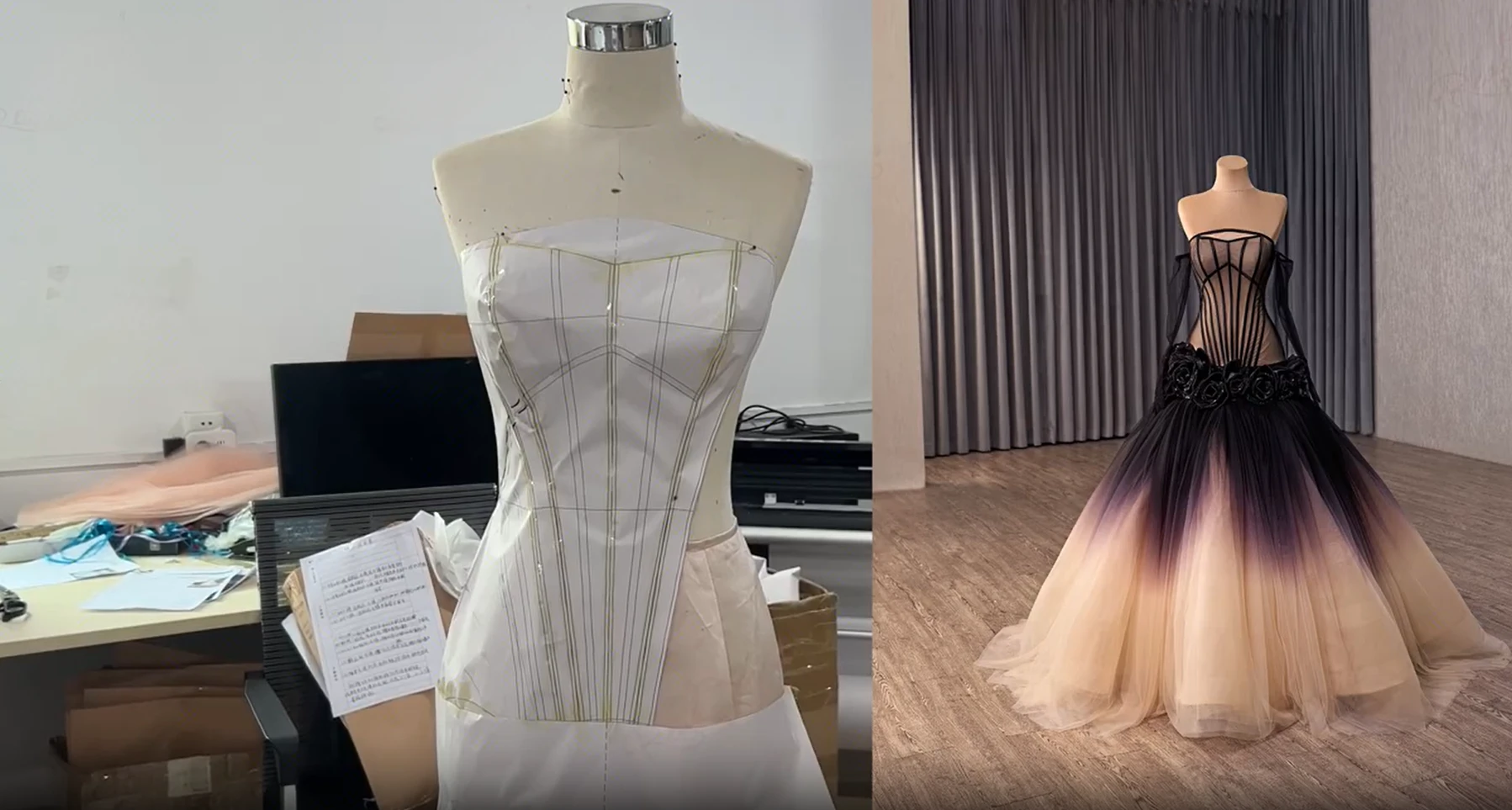
The first toile beside the finished gown. This dress stayed paper longer than most.
| 01 |
The Cage |
The bodice is the part people argue about, and it's the part that took the longest. It's a cage corset — black satin-covered boning stitched over a nude power-mesh base, the strips fanning from a narrow point under the bust down to the waist. From across the room it reads as sheer, almost like lingerie caught in public. Step closer and it's pure architecture. Every boning channel was drafted on the stand, because this geometry doesn't forgive flat paper. The strips have to curve with the ribs, pull the waist, and keep the pointed arches beneath the bustline symmetrical without ever looking stiff. Move one channel half an inch and the whole thing goes from armor to accident.
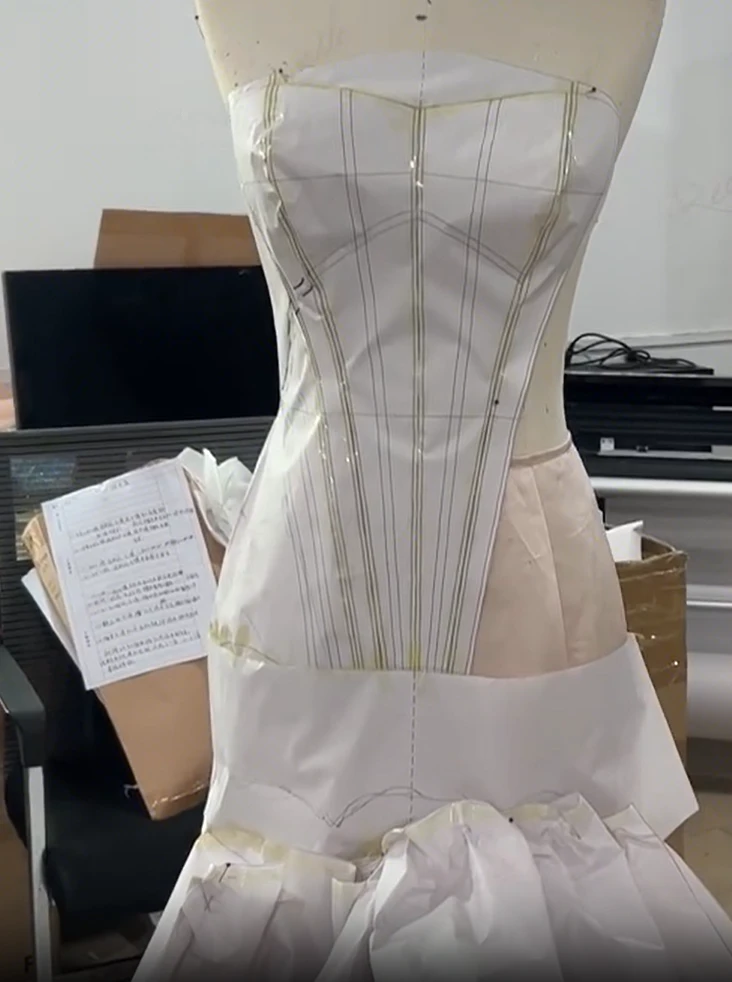
The bodice went through four mockups before the lines behaved.
The reference lived in our heads the whole time: Odile, the black swan, the woman who arrives at the ball in disguise and leaves with the entire room under her control. Gothic cathedral windows pull the same trick with line. So does a birdcage. It looks like restraint. It's actually the thing giving her the power.
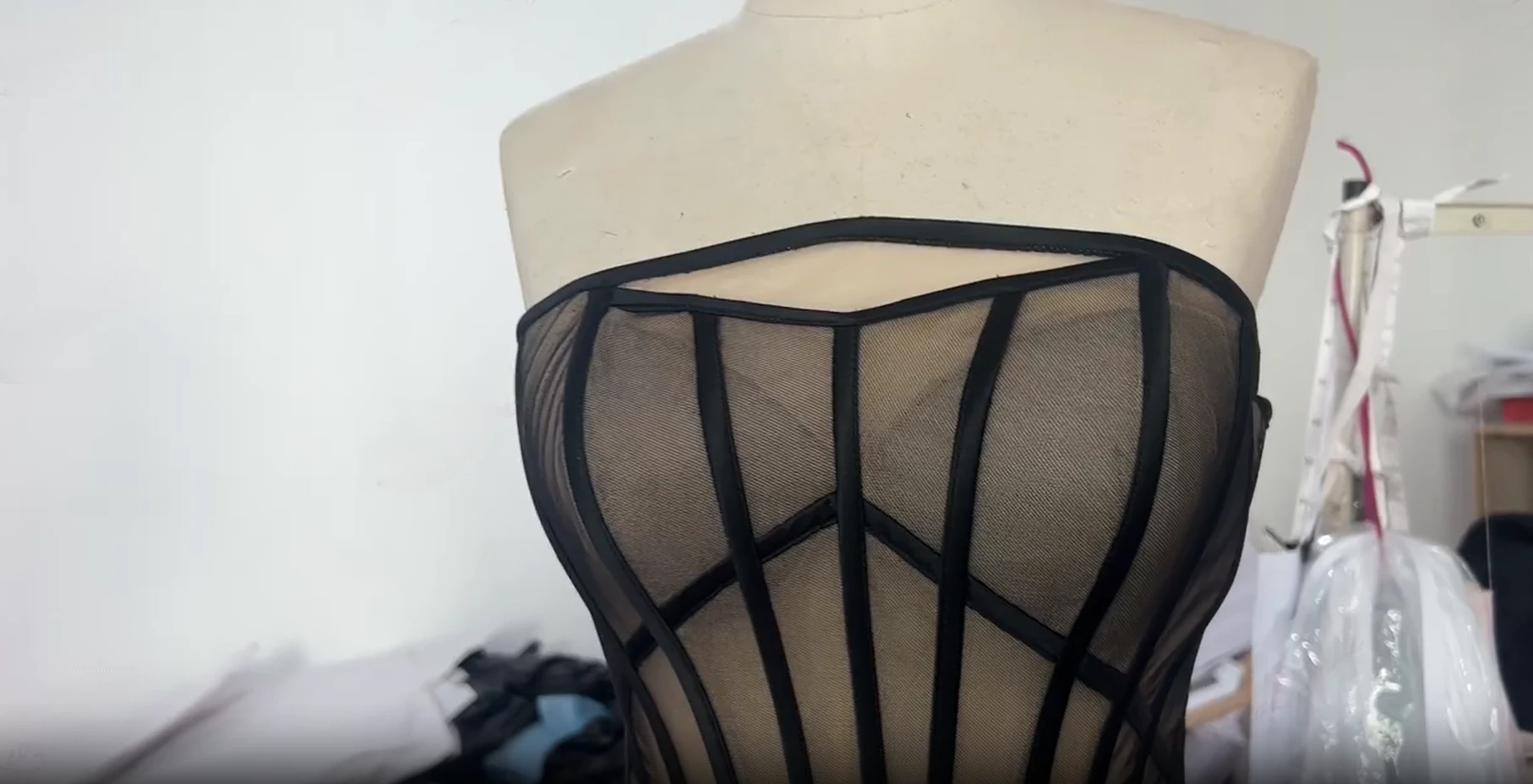
Black satin-covered boning over nude power mesh. From across the room it reads as sheer; up close it is architecture.
We build the channels with Rigilene boning, each piece encased in its own satin strip rather than slipped into a loose casing, so nothing twists or rolls the moment she sits through dinner. The mesh underneath is a stretch power net in a nude we matched against skin tones until it quietly disappeared. From a distance it's atmosphere — bare, dangerous, a little scandalous. Up close there's a real layer holding everything, soft against the skin, and that's the difference between a dress that looks revealing and one that feels safe to dance in. Sheer can turn cruel fast. The mesh has to hold.
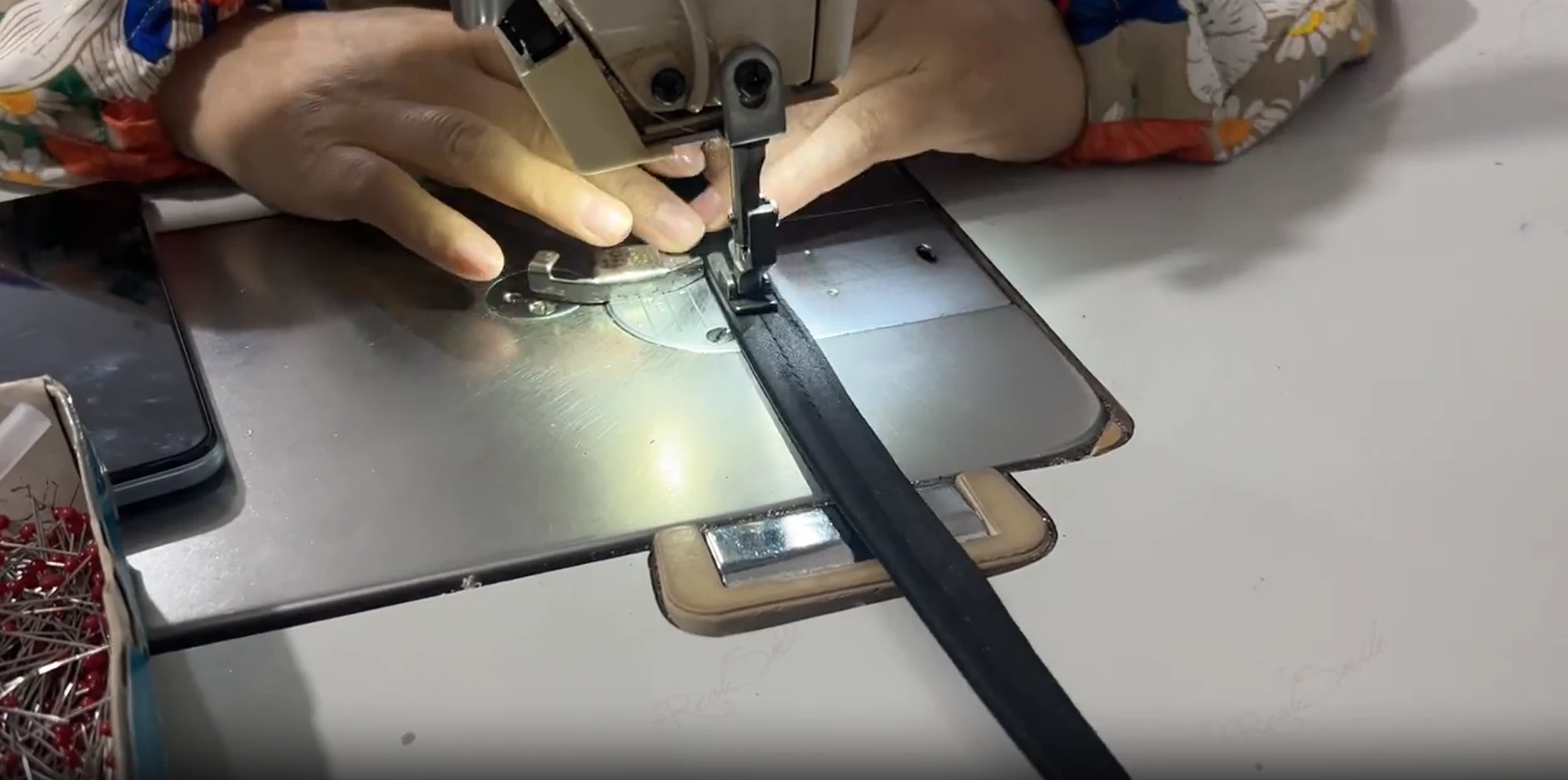
Each Rigilene channel is encased in its own satin strip so nothing twists. |
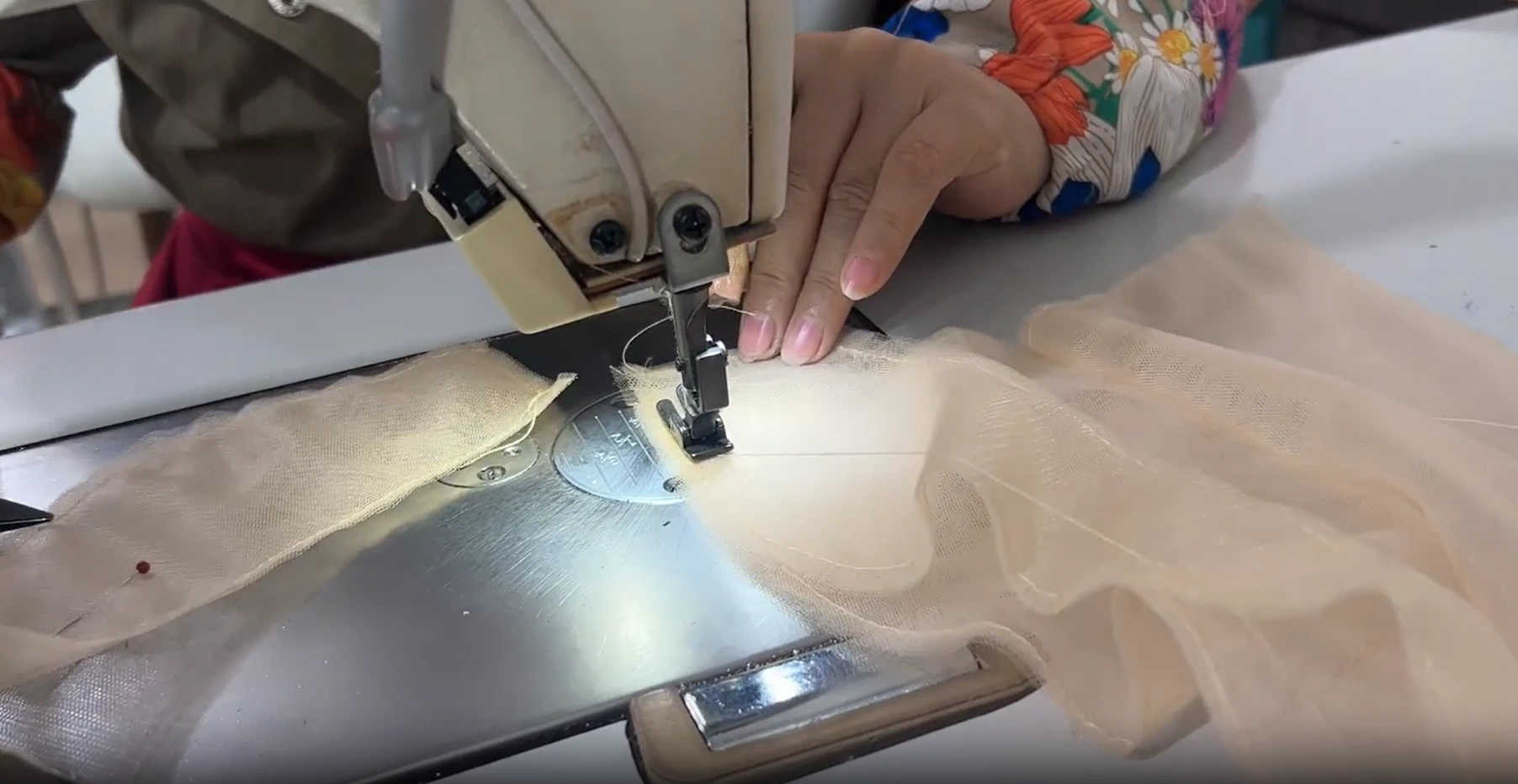
The power net was matched against skin tones until it quietly disappeared. |
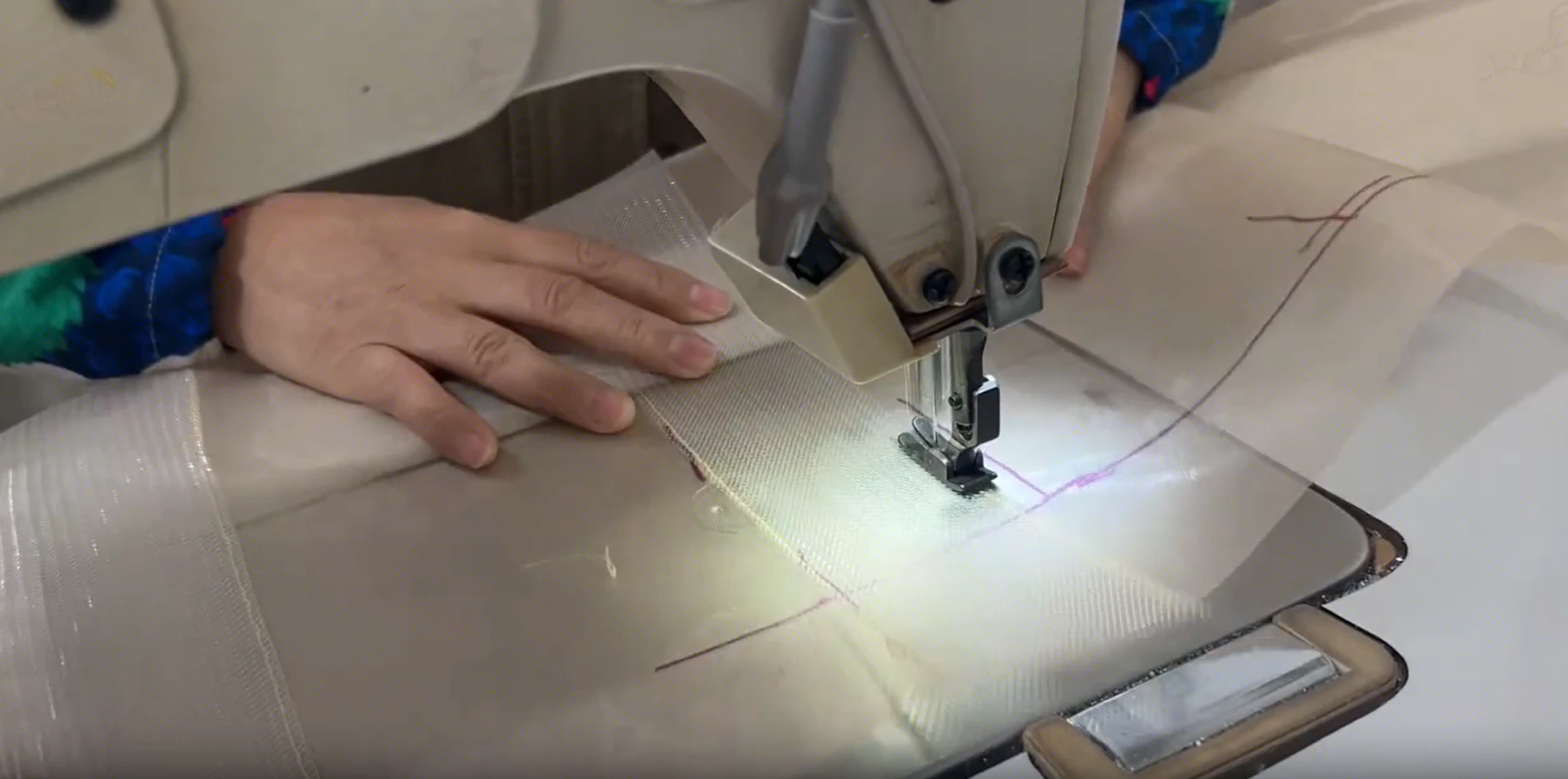
The actual sewing is unglamorous and worth saying so. The boning strips go through the machine in one long, slow pass, hands guiding the satin so the seam stays dead center; a twisted channel means ripping it out and starting over. The nude panels are worse, because tulle this fine remembers every needle mark. Our seamstresses keep a pin cushion the size of a small hedgehog and a patience I don't possess.
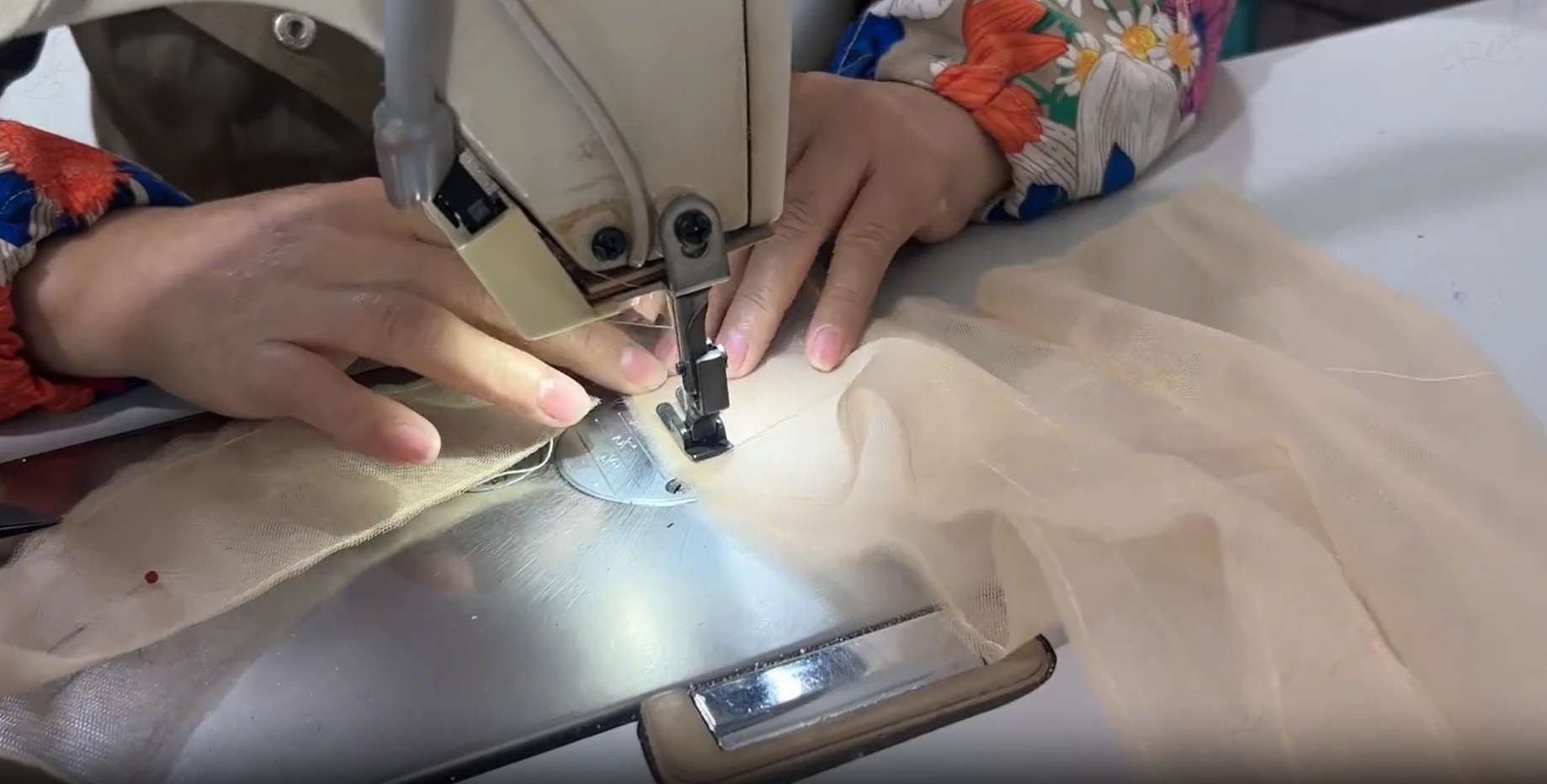
The nude panels are stitched slowly; tulle this fine remembers every needle mark. |
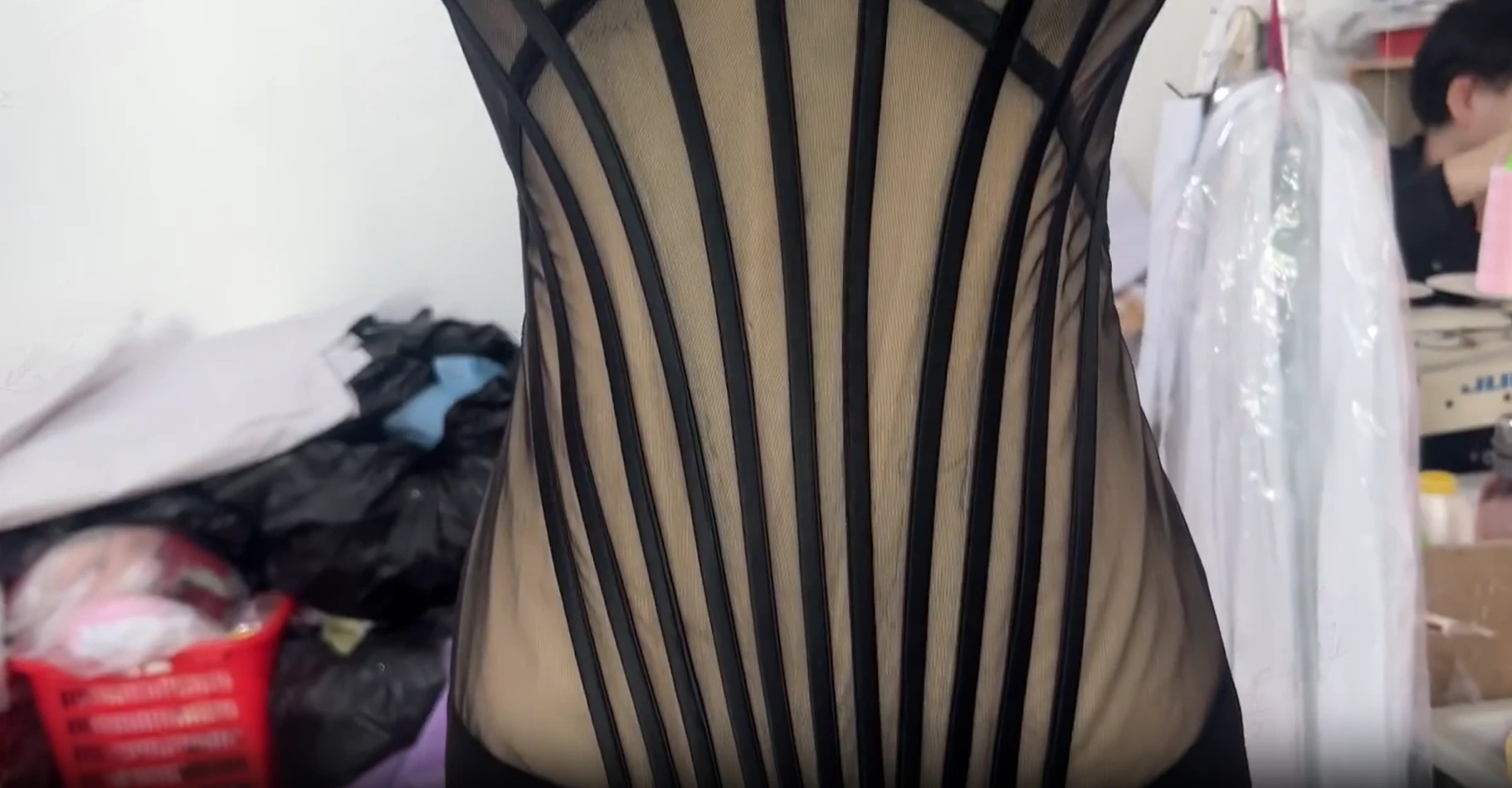
The back closes with a modesty panel and hooks. No lacing; nobody is sewn into her own wedding. |
It closes up the back with a modesty panel and a modest row of hooks — no lacing, despite the corset word, because nobody wants to be sewn into her own wedding and a bridesmaid with shaky hands shouldn't be part of the architecture. The first time a model got it on, she said the same thing most of them say: it feels held, not squeezed. That's the sentence we were waiting for.
| 02 |
The Sleeves, and the Version Without Them |
Draped off the shoulder, the sleeves are a single layer of the finest black tulle. No lining, no structure, just enough fabric for the arm to move through and leave a shadow behind. They soften the whole top. With them on, the dress borrows something from Victorian mourning portraits and the sharp, sad heroines of Pre-Raphaelite paintings — a little decayed, a little aristocratic, like she's halfway through a story that doesn't end well.
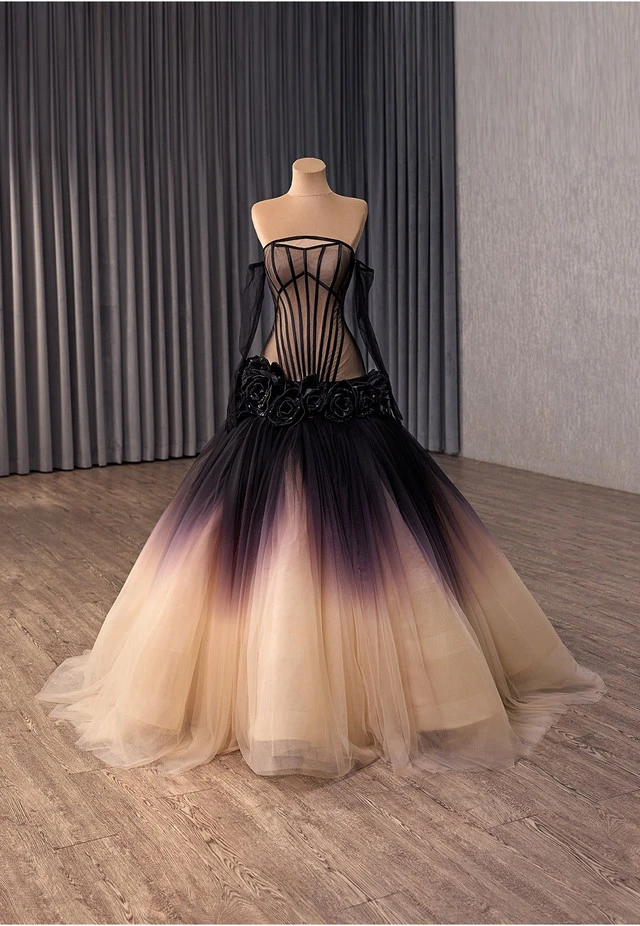
With sleeves on: covered and contemplative for the ceremony. |

With sleeves unhooked: bare and architectural for the reception. |
They also unhook. The sleeves are fully detachable, which gives the dress two personalities: covered and contemplative for the ceremony, bare and architectural by the reception. We reworked the attachment points until the whole switch takes under a minute. It's the kind of switch we build into wedding dresses for modern brides, because nobody should spend her cocktail hour fighting a snap in a bathroom mirror.
| 03 |
A Rose That Can't Exist |
At the waist, the two halves of the dress meet in a ring of roses, hand-formed one petal at a time out of black satin.
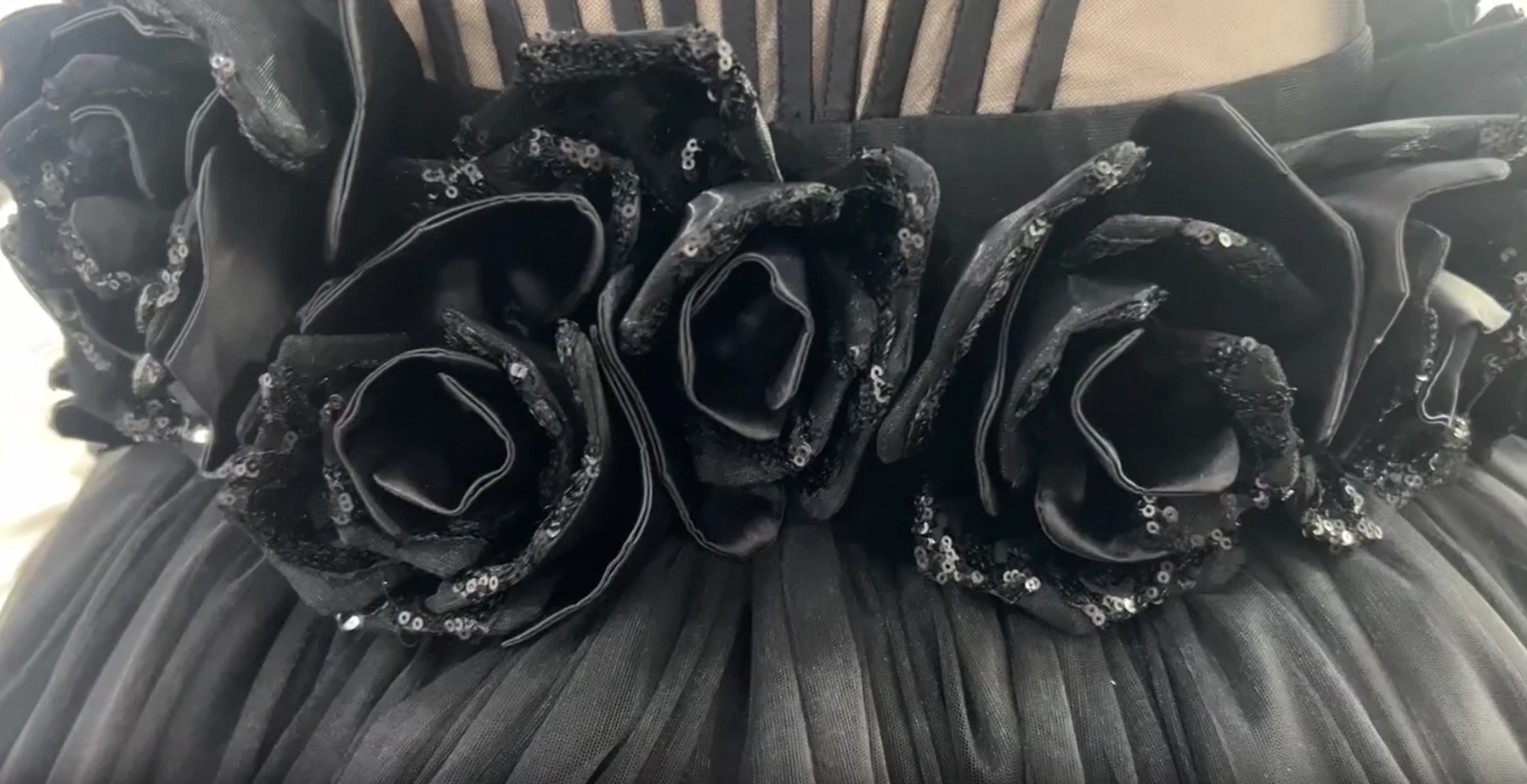
The ring is nine roses. Standing still they are matte and almost funereal; the second she walks, they catch light like something with a pulse.
This is the slowest work in the studio and nobody pretends otherwise. The ring is nine roses, and one rose takes the better part of an afternoon between two pairs of hands. Each petal is cut, its edge curled and heat-set so it holds the shape of a real flower caught mid-open, then stacked in layers until the rose carries enough weight to read as sculpture instead of appliqué. Along the petal edges runs a narrow border of sequins and tiny crystals — not a dusting, just the rim. Standing still, the roses are matte and almost funereal. The second she walks, they catch light like something with a pulse.
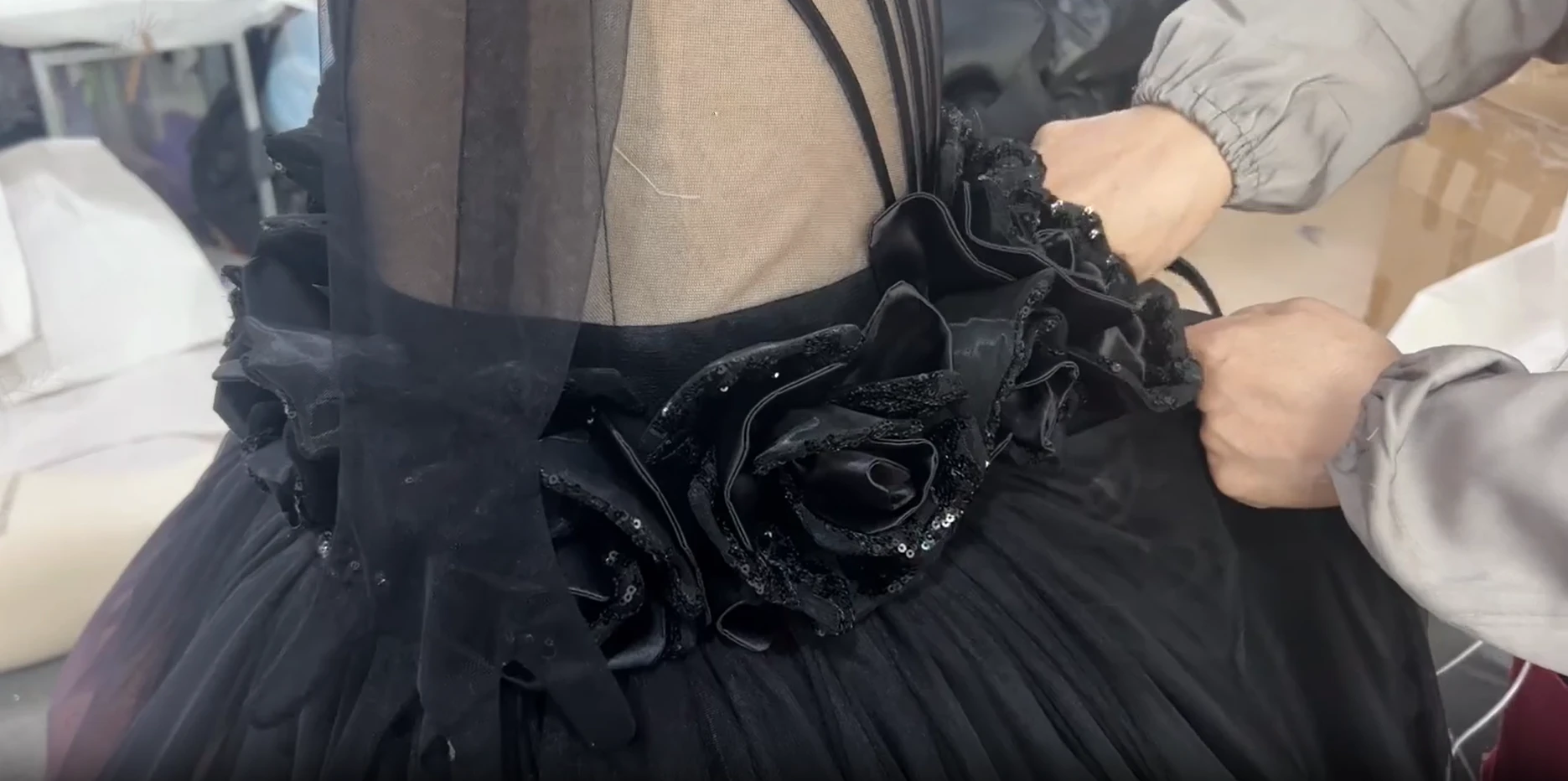
One rose takes the better part of an afternoon between two pairs of hands.
A ring of flowers at the waist is an old symbol, and we liked that it points two ways. A garland belongs to a wedding. A wreath belongs to a funeral, and the dress declines to say which one this is. A true black rose doesn't exist in nature anyway — the darkest garden roses are really a deep, bruised crimson — which is exactly why the image has held for centuries. It means a desire that knows it's forbidden and leans in closer. The roses also do a quieter, structural job: they land on the narrowest point of the waist and break the eye between the corset above and the explosion below.
| 04 |
The Gradient, Backwards |
Most ombre skirts fade from light at the top to dark at the hem. This one does the opposite, and the decision caused about a week of argument. It is also the reason this piece stands out among black wedding dresses for bold brides.

The skirt starts dense black at the waist and softens through grey and purple into champagne.
The skirt starts at the waist in black so dense it barely takes light. From there it breaks down through smoky grey into a bruised twilight purple, then keeps going, softening and warming, until the hem and the train settle into champagne nude. When the light catches it, the glow seems to come from underneath her — the sun already gone, the horizon not quite accepting it. That's also where the aurora came in. We kept a folder of northern lights photos through the whole build: color appearing where the sky should be dark, luminosity coming from the wrong direction entirely, a cold landscape suddenly, inexplicably sexy.

The train trails the lightest color in the whole dress, disappearing through a doorway. |
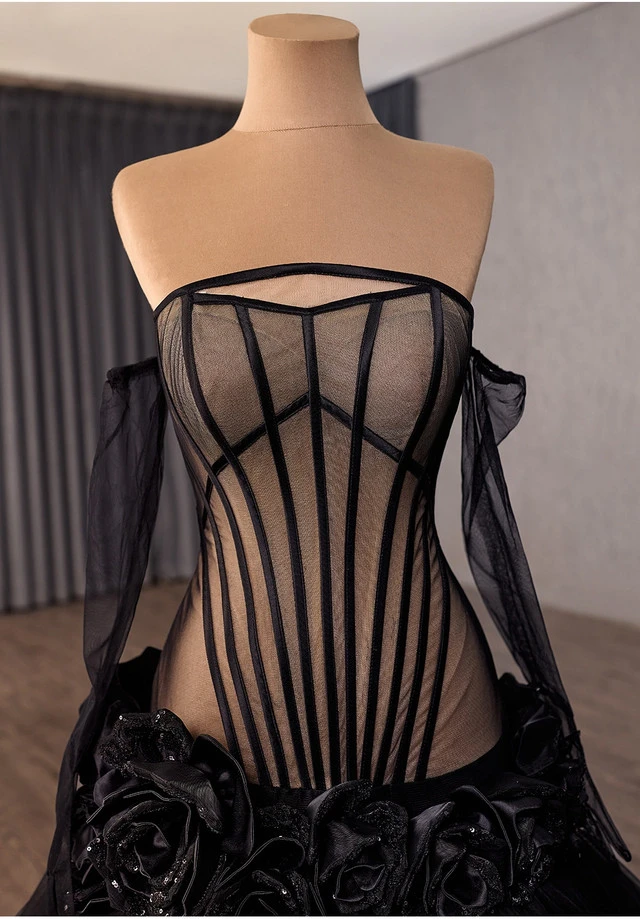
The roses land on the narrowest point of the waist, breaking corset from skirt. |
Getting there is a layering problem more than a dyeing one. The skirt is built from many tiers of tulle in different colors, and the depth of each shade is controlled by how many layers sit on top of it. The purple in the middle is the part that makes the rest make sense. Without it, black and champagne just brawl. With it, the dress has a logic — night falling, warmth rising, a kind of melancholy that's also lavish, maybe a touch feverish. The outermost layer is the palest champagne, a single veil over everything, and it's what gives the hem that fogged, slightly out-of-focus edge.
Each shade is controlled by the number of tulle tiers layered over it, not by a single dye bath.
The train does what good trains do: it trails behind her in the same gradient, so the last thing the room sees is the lightest color in the whole dress disappearing through a doorway. Tulle this light catches on everything, which we learned the hard way during the first fitting, and the hem is finished with a narrow internal ribbon to keep it from laddering. Nobody notices that part. That means it's working.
| 05 |
The Argument the Dress Is Having |
What makes the piece hold together, for us and hopefully for the woman in it, is that the two halves don't quite agree. The bottom is the ball gown at its most classic — cinched waist, enormous skirt, fabric enough to claim half the dance floor. Every childhood idea of a princess lives in that skirt. The top is a sheer, boned, nearly undressed provocation.
She can walk this dress down an aisle. No one in that room will mistake her for someone waiting to be rescued.
People ask why black, as if the color needed a defense. White has only been the bridal default for a couple of centuries, and before that a bride simply wore her best dress, whatever color it happened to be. The same shift is now visible in the black wedding dresses featured in Vogue and on modern runways. Black is honest about something white has to pretend at: that a wedding is a threshold, and thresholds are frightening as well as tender. The woman who picks this dress isn't mourning anything. She's declining the costume. To see the full palette, browse black bridal gowns in every silhouette.
We've pictured it at gothic weddings and black-tie altars, at Halloween-season proms, at a black Quinceañera where the birthday girl wants the court dress without the court's innocence, under stage lights where the sequins at the waist can do their worst. We cycled through names — Midnight Bloom, Twilight Descent, half a dozen worse ones — and landed on Odile, because the swan was already there in the first paper mockup.
The dress is in the showroom now. People walk past the white gowns and stop at this one every single time, which is either a compliment or a warning, and with this dress there was never much difference.
| Shop the gradient black tulle gown |
Handmade to order, with detachable sleeves and the champagne gradient train.